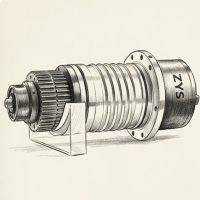
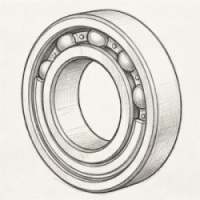
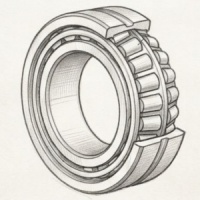
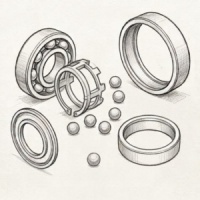
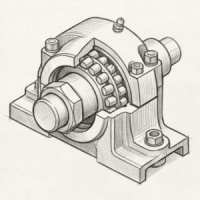
Bearing preload refers to the intentional application of an internal load to a rolling bearing, effectively eliminating its original internal clearance. While it may seem like adding extra stress to the bearing, preload is actually designed to improve the bearing's mechanical performance. The main purposes and benefits of bearing preload include:
1. Increased Rigidity
The primary function of preload is to enhance the rigidity of the bearing assembly. A non-preloaded bearing exhibits elastic deformation under initial loads, whereas a preloaded bearing shows significantly smaller deformation when subjected to external forces. This leads to a stiffer shaft system. Bearing rigidity (measured in kN/mm) is defined as the ratio of applied force to elastic deformation. Within a certain load range, preloaded bearings deform less elastically than non-preloaded bearings, providing better support and stability.
2. Improved Rotational Accuracy
Preloading eliminates the internal clearance of a bearing, ensuring that rolling elements maintain constant contact with the raceways. This minimizes radial and axial runout, which is critical for high-precision equipment such as machine tool spindles, where even minor deviations can affect machining quality.
3. Reduced Vibration and Noise
In the absence of preload, rolling elements may slip or wobble in unloaded zones, generating noise. Preload reduces bearing clearance and guides rolling elements throughout operation, preventing slippage and displacement. This results in smoother operation and significantly lower noise levels.
4. Enhanced Shaft Guidance
By providing higher rigidity and reducing deflection under load, preloaded bearings improve shaft guidance precision. Applying different preload values to bearing rings and small gear bearings can optimize stiffness, ensuring more accurate and stable gear meshing. This minimizes dynamic forces and noise while extending the service life of gears.
5. Compensation for Wear During Operation
Bearings gradually develop additional clearance due to wear during operation. Preload can compensate for this clearance, maintaining the desired performance throughout the bearing's life.
6. Extended Bearing Service Life
An optimally preloaded bearing system distributes loads more evenly, reduces excessive stress on individual rolling elements, and enhances operational reliability, all of which contribute to a longer service life.
Important Consideration: Optimal Preload
Although bearing preload offers many benefits, more preload is not always better. Excessive preload increases internal load, friction torque, and operating temperature. Overly high contact stress can accelerate fatigue, ultimately reducing bearing life.
Conclusion
Bearing preload is a precision engineering technique that trades load for accuracy and rigidity. It is widely used in machine tool spindles, automotive wheel hubs, and precision instruments. The key is selecting the optimal preload based on specific operating conditions, including rotational speed, applied load, and precision requirements. Properly applied preload ensures smoother operation, higher accuracy, and longer bearing life.